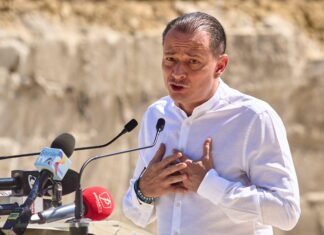
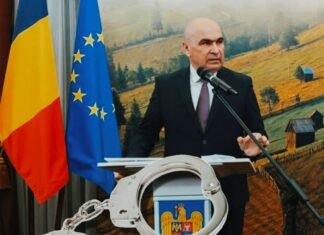
In a recent address to the PSD Suceava, party leader Marcel Ciolacu shared his perspective on the recent elections and the future direction of the party. He emphasized his belief that the party has not lost, but rather stands at a pivotal moment, presenting an opportunity for revival and renewal.
Ciolacu’s speech highlighted the critical need for the PSD to avoid dwelling on past disappointments and to focus instead on the potential for recovery and growth. He articulated a vision where the party is positioned to learn from recent challenges rather than allowing these setbacks to define their trajectory. „I do not consider that we lost the elections,” he stated, reflecting a sense of optimism and resilience. Instead, he encourages the members of the party to view this period as a second chance—a pivotal opportunity to regroup and redefine their objectives and strategies.
The message brought forth by Ciolacu resonates in the context of the current political landscape, where the PSD has faced various hurdles that have tested its leadership and organizational integrity. He acknowledges that while there may have been aspirations and expectations that did not materialize, it’s essential to transition from a mindset of loss to one of potential and opportunity.
Moreover, Ciolacu called for unity within the party, asserting that the PSD should not remain anchored to past desires or ideals that may no longer align with the reality of the current political atmosphere. His call to action is for members to engage actively in redefining the party’s identity and its connection to the electorate. This involves embracing adaptability and being willing to pivot in response to the needs of the time, rather than clinging to outdated notions of what the party once stood for.
In outlining the way forward, Ciolacu stressed the importance of collaboration, urging party members to come together to share ideas and perspectives that will aid in rejuvenating the PSD’s approach. He reminded them that success in politics requires not only resilience but also an agile response to the changing dynamics of public opinion and societal needs.
Furthermore, Ciolacu’s address is also a reminder of the significance of engaging at the grassroots level. He encouraged party members to reconnect with local communities, emphasizing the necessity of understanding their concerns and aspirations. By being present and attuned to the electorate, the PSD can begin to rebuild trust and allegiance among its supporters, effectively turning a new page in its political narrative.
Ultimately, Ciolacu’s remarks serve as a clarion call for transformation within the PSD, urging members to embrace the concept of a second chance. His leadership is geared towards fostering an environment of hope and possibility, where past challenges are reframed as lessons for growth rather than as anchors of defeat. There exists a collective opportunity for the party to emerge stronger and more relevant, but this can only be realized through unity, dialogue, and a commitment to evolving alongside the needs of the populace.
In conclusion, the PSD is at a crossroads, and under Ciolacu’s stewardship, the focus will be on harnessing the potential of this moment. By collectively facing the present with optimism, the party may very well pave the way for a revitalized future.