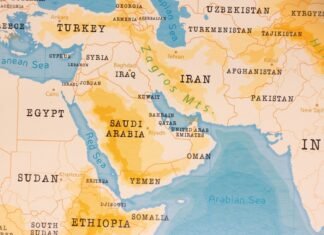
In a recent interview with an Israeli television network, former President Donald Trump issued a bold warning regarding the Middle East. He announced plans to deploy another aircraft carrier along with “military reinforcements” to the region. This statement underscores his administration’s longstanding commitment to countering Iranian influence and actions.
Trump emphasized that the United States remains firmly opposed to Iran obtaining nuclear weapons or advanced missile capabilities. He made it clear that his administration would continue to take a hardline stance on Iran, asserting that the nation’s ambitions for military power pose a significant threat, not just to the United States, but to global security.
The interview highlighted Trump’s belief in the necessity of demonstrating military strength as a deterrent against potential Iranian aggression. By sending an additional aircraft carrier, he aims to send a clear message: the U.S. is prepared to defend its interests and those of its allies in the region. Such moves have sparked discussions about the overall approach the U.S. should adopt toward Iran, especially amidst rising tensions.
Furthermore, Trump expressed his conviction that Iran is interested in negotiating a deal with the U.S. He believes that the Islamic Republic recognizes the potential fallout from military escalation and, therefore, may be looking for a diplomatic resolution. This assertion, however, is met with skepticism by many analysts who question the sincerity of Tehran’s intentions and its long-standing anti-American rhetoric.
In summary, Trump’s statements reflect a strategic pivot aimed at strengthening U.S. presence in the Middle East while projecting military deterrence against Iran. He combines a tough stance on military capabilities with a glimmer of hope for diplomatic engagement, illustrating the complex dynamics at play in U.S.-Iran relations. This dual approach could influence future policies and maneuvering in one of the world’s most volatile regions.
As debates around military deployment and diplomatic negotiations continue, Trump’s emphasis on military readiness may resonate with allies who feel threatened by Iran’s regional ambitions. However, the mixed signals regarding diplomacy could complicate any potential resolutions and agreements moving forward. Thus, maintaining a balance between deterrence and dialogue appears to be a pivotal aspect of U.S. efforts to navigate its relationship with Iran and foster stability in the Middle East.
As the situation unfolds, it will be crucial for policymakers to consider the long-term implications of military escalation alongside diplomatic avenues. Each action taken in this intricate geopolitical landscape carries significant consequences that could affect not only U.S. interests but also the security and stability of the entire region. The future of the Middle East remains uncertain, and the approach taken by the U.S. will significantly shape the ongoing narrative. With the deployment of military assets still looming, stakeholders will be watching closely to see how these developments unfold and what they mean for peace and security in the Middle East moving forward.