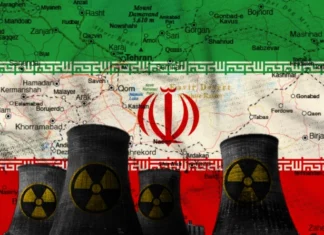
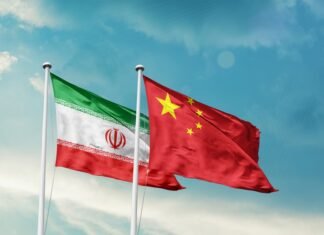
The Qatar Football Association (QFA) has announced the suspension of all scheduled tournaments within the country in response to recent airstrikes conducted by the United States and Israel against Iran. This escalation has heightened tensions in the region, prompting Iran to retaliate with attacks on American targets across the Middle East, notably in the United Arab Emirates, Saudi Arabia, and Qatar.
One of the key competitions affected by this decision is the Finalissima 2026, a high-profile match between Spain and Argentina, originally slated for March 27 in Qatar. The QFA has indicated that they will provide updates regarding the rescheduling of these events in the coming days. However, the ultimate decision regarding the match lies with UEFA and Conmebol, the governing bodies overseeing the event. With the political climate rapidly deteriorating, the region is currently on high alert as tensions between these nations continue to rise.
The implications of these developments are significant, not only for sports in Qatar but also for the broader geopolitical landscape. Qatar has positioned itself as a growing hub for international sports, especially in light of its preparations for the upcoming 2022 FIFA World Cup. The suspension of tournaments can have profound impacts on tourism, local businesses, and even Qatar’s global image as a host for significant sporting events.
Given the ongoing conflict, stakeholders in the sporting community are closely monitoring the situation. The QFA’s decision reflects both safety concerns and the desire to manage the tournament schedule in light of global events. Sporting events often serve as a unifying force, but they can also be affected by international relations, as seen in this scenario. The QFA’s actions highlight the interplay between politics and sports, demonstrating that events on the field can be drastically influenced by tensions off it.
While the immediate focus remains on the Finalissima and other local tournaments, the broader implications of this conflict extend to various facets of life in Qatar and the surrounding region. Fans, athletes, and organizers alike are affected by the uncertainty brought about by these geopolitical events. Many are hoping for a swift resolution to the tensions, allowing for a timely return to normalcy in both sports and daily life.
As the QFA navigates this complex situation, they are set to collaborate closely with international governing bodies like UEFA and Conmebol. The hope is to find a viable path forward that ensures both safety and the spirit of competition can coexist. Meanwhile, fans are left in anticipation, eager for news regarding the future of their favorite teams and the chance to witness thrilling matches. The coming weeks will be crucial, not only for sports in Qatar but also for the overall stability of the region.
In conclusion, the decision to suspend tournaments in Qatar is a reflection of the interconnected nature of sporting events and geopolitical issues. It serves as a reminder that beneath the excitement of sports, global events can influence and reshape the landscape, affecting countless individuals and communities reliant on these events for both economic and social reasons. The world of sports will continue to watch closely as the situation develops.