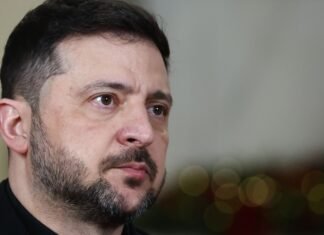
Israeli Prime Minister Benjamin Netanyahu has reached out to Ukrainian President Volodymyr Zelensky to arrange a meeting, focusing on Ukraine’s newly developed interceptor drones amid the ongoing conflict with Russia. This meeting, which is likely to take place early next week, underscores the growing collaboration between Ukraine and Israel in matters of defense and military technology.
Ukrainian Ambassador to Israel, Evghen Korniciuk, confirmed that discussions will be held regarding the innovative drone technology that Ukraine is utilizing to counteract threats in the war. Ukraine has established itself as a leader in intercepting Iranian drones, and it applies this expertise to bolster its defense against Russian aggression. The willingness of Ukraine to share its knowledge and experience in this area is a vital development for allied partners, especially those in the Arab world.
In a strategic move to enhance regional security, Ukraine has begun deploying military experts to various countries in the Middle East, such as Saudi Arabia, Qatar, and the United Arab Emirates. This collaboration aims to equip these nations with the necessary skills and technologies to defend against Iranian drone attacks, which pose significant threats to regional stability. The presence of Ukrainian military advisors bolsters cooperative efforts in combatting shared adversaries, fostering an atmosphere of mutual support and understanding.
Additionally, Ukraine has implemented interception systems to secure a U.S. military base in Jordan, further highlighting its commitment to international partnerships. This proactive approach not only serves to protect vital installations but also strengthens alliances with the United States and regional partners who share common security interests.
The potential meeting between Netanyahu and Zelensky signifies the importance of collaborative defense strategies among nations facing similar threats. By engaging in dialogue and sharing technological advancements, both Ukraine and Israel can enhance their defensive capabilities and adapt to the evolving landscape of modern warfare.
Moreover, the opportunity for Ukraine to share its knowledge in drone interception with Arab nations is particularly noteworthy. It reflects a broader shift in international relations where former adversaries can find common ground in combating shared threats. The escalating prevalence of drone technology in warfare has necessitated a united front, and both Ukraine and Israel are poised to lead in this domain.
Ukraine’s intent to collaborate with various countries is also indicative of its strategic shift towards building a more extensive network of international partnerships. As the country continues to fend off Russian aggressions, forging alliances with nations that face similar threats becomes crucial. The dynamics of global security are rapidly changing, and Ukraine’s experience in drone warfare can offer valuable insights that may benefit both traditional allies and emerging partnerships in the region.
In conclusion, the anticipated meeting between Israeli Prime Minister Benjamin Netanyahu and Ukrainian President Volodymyr Zelensky could herald a new era of defense cooperation. In a time when the conflict with Russia remains critical, such alliances are essential not only for Ukraine’s security but also for the stability of the broader region. As countries unite against common threats, the sharing of technology, strategies, and expertise may significantly enhance their ability to safeguard national interests and promote collective security in the face of evolving challenges.