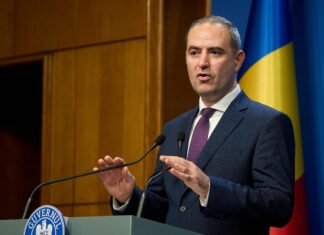
On Friday, the President of Romania, Nicușor Dan, signed into law the state budget for the year 2026, which will take effect immediately after its publication in the Official Gazette. Alongside this, the president also promulgated the state social insurance budget law and issued a decree regarding caps on specific fiscal indicators within the budgetary framework.
In his remarks, Nicușor Dan indicated that he would proceed with the promulgation of the state budget law as soon as he receives the reasoning from the Constitutional Court of Romania, which has dismissed challenges posed by the AUR party. The Court has confirmed that both laws were passed under an emergency procedure, asserting that the expedited parliamentary timelines do not violate the Constitution.
Additionally, the Court clarified that the opinions issued by the Economic and Social Council are advisory in nature and not mandatory. Many of AUR’s criticisms, the Court noted, do not pertain to the social insurance budget law; instead, they refer to pre-existing normative acts. This distinction is critical as it underscores the legitimacy of the budget laws and assures stakeholders of their compliance with constitutional norms.
The passage of the 2026 budget is particularly noteworthy as it reflects the government’s strategic priorities and allocation of resources for the upcoming year. It aims to address key sectors such as health, education, and infrastructure, which are pivotal for Romania’s growth and development. With a focus on bolstering social services, the budget is anticipated to provide substantial investments in public health facilities and educational institutions, facilitating improvements in these essential areas.
The budget will also prioritize economic recovery following the challenges posed by recent global events. It is expected to include measures that encourage investment, job creation, and support for small and medium-sized enterprises (SMEs), which are vital for the economy. Such initiatives aim to stimulate activity across various sectors, ensuring a balanced and sustainable economic environment.
Moreover, the inclusion of caps on fiscal indicators is a strategic move to maintain financial discipline and transparency in government spending. By specifying these limits, the government seeks to instill confidence among investors and citizens regarding fiscal responsibility. This move also aligns with broader objectives of maintaining economic stability and fostering a climate conducive to sustained growth.
As Romania prepares to navigate the complexities of 2026, the budget’s prompt enactment signifies the government’s commitment to tackling emerging challenges while maximizing opportunities for development. While the AUR party’s opposition highlights the contentious nature of fiscal policy debates, the government’s push to finalize and implement the budget underscores the urgency of addressing the nation’s pressing needs.
Overall, the promulgation of the state budget and the accompanying social insurance measures reflect a cautious yet ambitious approach to governance. With a clear focus on essential services and economic revival, the Romanian administration is poised to embark on a course that prioritizes the welfare of its citizens and the resilience of its economy. The implementation of these policies will undoubtedly be closely watched, as their effectiveness will determine the country’s trajectory in the coming years.