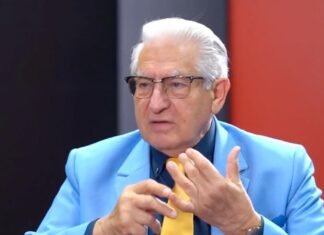
In a recent statement, Daniel David highlighted a concerning trend among Romanians: the tendency to seek information independently rather than relying on established institutions. This behavior, he argues, contributes to the rise of pseudoscience and makes individuals more susceptible to conspiracy theories and misinformation, commonly referred to as „fake news.”
The observation stems from a comprehensive analysis conducted at the European level, focusing on attitudes towards science and technology. David’s insights reflect a broader issue faced by many societies today, where the accessibility of information online often leads to individuals navigating knowledge without adequate guidance. Instead of drawing from credible, institutional sources, many individuals turn to personal research that can result in the absorption of unreliable information.
This phenomenon is particularly troubling given the current global context, where misinformation can spread rapidly across social media and other online platforms. By choosing to inform themselves outside of trusted channels, people may inadvertently align themselves with dubious claims and unverified theories. David’s analysis suggests that this shift not only undermines public trust in scientific institutions but also erodes critical thinking skills, leaving individuals ill-equipped to differentiate between credible research and pseudoscientific assertions.
Moreover, he points out that the implications of such behavior extend beyond individual beliefs to affect the broader societal understanding of science and technology. Without a firm grounding in reliable information, public discourse may be distorted, leading to informed decisions being overshadowed by sensationalist narratives. For instance, during public health crises, such as the COVID-19 pandemic, misinformation about vaccines and treatment options has posed significant challenges to global health efforts.
Data from the European analysis highlights that countries with stronger educational systems and public engagement in scientific discourse tend to be less susceptible to such influences. In contrast, Romania’s approach appears to lean towards a preference for self-guided learning, which lacks the scaffolding of critical evaluation and peer review typically found in institutional settings. This can create a fertile ground for conspiracy theories to flourish and propagate, making civic education and robust scientific literacy essential.
In light of these findings, Daniel David calls for a reinvigorated commitment to public education about science and technology. He advocates for initiatives that would encourage collaboration between educational entities and the public to enhance understanding and trust in scientific findings. This could involve workshops, public seminars, and the promotion of critical thinking skills from an early age, aimed at equipping individuals with the tools needed to navigate information effectively.
Ultimately, as we continue to grapple with the complexities of information in the digital age, fostering a culture that values credible sources and informed discussions will be crucial. Only then can society hope to mitigate the risks associated with misinformation and ensure that science remains a cornerstone for decision-making. David’s insights underscore the importance of re-establishing the relationship between individuals and scientific institutions to safeguard against the threats posed by pseudoscience and the proliferation of misleading narratives.