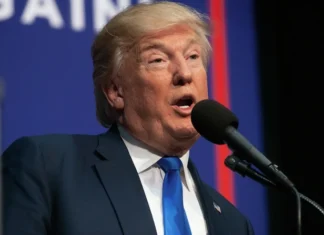
In a recent interview with Axios, U.S. President Donald Trump discussed the military operation in Iran that was carried out in coordination with Israel. He indicated that he has several „exit options” regarding the ongoing military actions, highlighting that he could either extend the operations or conclude them within a few days. Trump’s decision to initiate these strikes stemmed from a perceived lack of progress in ongoing negotiations with Iran.
During the interview, Trump elaborated on his views regarding Iran’s negotiating tactics. He suggested that while Iran initially showed interest in reaching an agreement, they consistently withdrew from discussions. This behavior led him to believe that the Iranian leadership was not genuinely committed to achieving a diplomatic resolution. The U.S. military operation was seen as a necessary response to this perceived intransigence in negotiations.
Following the initiation of military actions, Iran retaliated by launching strikes against Israeli positions as well as U.S. forces in the region. This escalation has further complicated an already tense situation in the Middle East. Trump’s remarks indicate that he is weighing the responses from Iran and the implications of ongoing conflict in the region. He is evidently keen on managing the situation carefully to avoid prolonged military engagement.
The backdrop of this conflict is deeply rooted in complex geopolitical dynamics, where both the U.S. and Israel have strategic interests that often conflict with Iran’s regional ambitions. Trump’s administration has consistently articulated a tough stance against Iran, viewing it as a central player challenging U.S. interests and allies in the Middle East. The military operation is framed within a broader strategy to counter what they see as Iranian aggression.
The situation remains fluid, and Trump’s comments suggest that he is considering various military and diplomatic options. By emphasizing his ability to conclude military operations quickly, he seems to be positioning himself as a decisive leader capable of responding to threats, while simultaneously keeping open the possibility for future negotiations should conditions change.
Reaction to Trump’s comments has been varied. Some analysts argue that a military response could undermine potential diplomatic efforts, while others believe that a show of force might compel Iran to reconsider its negotiating stance. The delicate balance of power in the region makes it difficult to predict how Iran will respond, especially given the history of mutual distrust between the two nations.
As the situation develops, the international community is closely monitoring the actions taken by both the U.S. and Iran. The potential for further escalation remains a concern, and Trump’s willingness to adapt his military approach based on Iran’s actions underscores the precarious nature of the current geopolitical landscape. Ultimately, the outcomes will likely hinge on both the efficacy of military operations and the potential for renewed negotiations, illustrating the complex interplay between diplomacy and military strategy in U.S.-Iran relations.
In conclusion, President Trump’s recent comments reflect the complexities of military and diplomatic engagements in the Middle East. With various options available to him, both the U.S. and Iran face pivotal moments ahead, determining the course of a conflict that has far-reaching implications for the region and beyond.