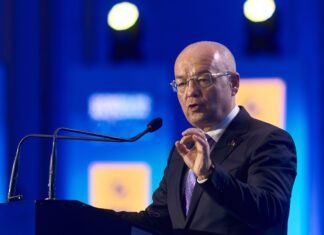
Pete Hegseth, head of the Pentagon, recently emphasized that the United States is primarily focused on curbing Iran’s nuclear ambitions, downplaying the roles of Russia and China in this crucial issue. According to Hegseth, there are no pertinent messages directed toward these two nations, regardless of their established diplomatic and trade relations with Iran.
The geopolitical landscape surrounding Iran is increasingly complex. Tensions have risen sharply due to ongoing military actions by the U.S. and Israel against Iranian targets. In response to these actions, both Russia and China have openly criticized the military strategy employed by the U.S. and Israel, arguing that their military maneuvers do not contribute to stability in the region. Russia has gone so far as to state that there is a lack of evidence supporting claims that Iran is actively developing nuclear weapons. Meanwhile, China’s response has emphasized the need for de-escalation, as they urged the U.S. and its allies to cease hostilities against Iran.
On a diplomatic front, China has recently announced the dispatch of a special envoy to the Middle East. This move underscores China’s intent to play a more active role in mediating tensions in the region. Beijing has articulated its commitment to the protection of civilian lives and the safeguarding of maritime routes, which are often jeopardized in times of conflict. This initiative highlights China’s strategic interest in fostering stability and securing its economic interests, particularly in energy supplies from the Middle East.
The contrasting positions of the U.S. on one hand and Russia and China on the other illustrate the various narratives at play when it comes to Iran. While the U.S. remains fixated on preventing what it views as an imminent threat from Iran’s nuclear program, Russia and China seem more focused on advocating for dialogue and diplomatic solutions. The divergent approaches of these global powers suggest that the path forward will likely be fraught with challenges and disagreements.
In this intricate web of international relations, the actions and statements made by key players such as Hegseth serve to amplify the tensions already existing in the region. While the U.S. prioritizes its security objectives over diplomatic engagement, countries like Russia and China are positioning themselves as advocates for negotiation, emphasizing the need for peaceful resolutions instead of military confrontation.
As the situation continues to evolve, it remains to be seen how these geopolitical dynamics will unfold. The increased involvement of China, particularly with its plans to mediate in the Middle East, could signal a shift in the balance of influence in the region. Global reactions to Iran’s actions and ambitions will likely continue to diverge, reinforcing the complexities of international diplomacy in an era characterized by rapidly shifting alliances and priorities.
In summary, while the U.S. is singularly focused on Iran’s nuclear capabilities, the responses from Russia and China highlight a broader consensus on the need for diplomatic solutions. How these dynamics evolve will be crucial for regional and global stability in the coming months.